
Types of Red Wine Glasses: Bordeaux, Burgundy, Universal & More
Red wine glasses come in different bowl shapes, proportions and designs. Understanding the differences between Bordeaux, Burgundy, universal and other red wine glass types can help restaurants, hotels, wedding suppliers and wholesale buyers select the right glassware collection for their customers.
Looking for Red Wine Glasses for Your Business?
Explore Star-Luck's wine glass collection for restaurants, hotels, weddings, events and wholesale projects.
1. Why Are There Different Types of Red Wine Glasses?
At first glance, many red wine glasses look similar. Most have a relatively large bowl, a stem and a stable base. However, the proportions can vary significantly from one design to another.
Bowl size, opening diameter and overall shape affect how the wine is presented and experienced. A wider bowl provides more surface area for the wine, while a tapered opening can concentrate aromas near the rim.
For professional buyers, these differences also affect the visual identity of a table setting, storage requirements, packaging and product positioning.
2. The Main Types of Red Wine Glasses
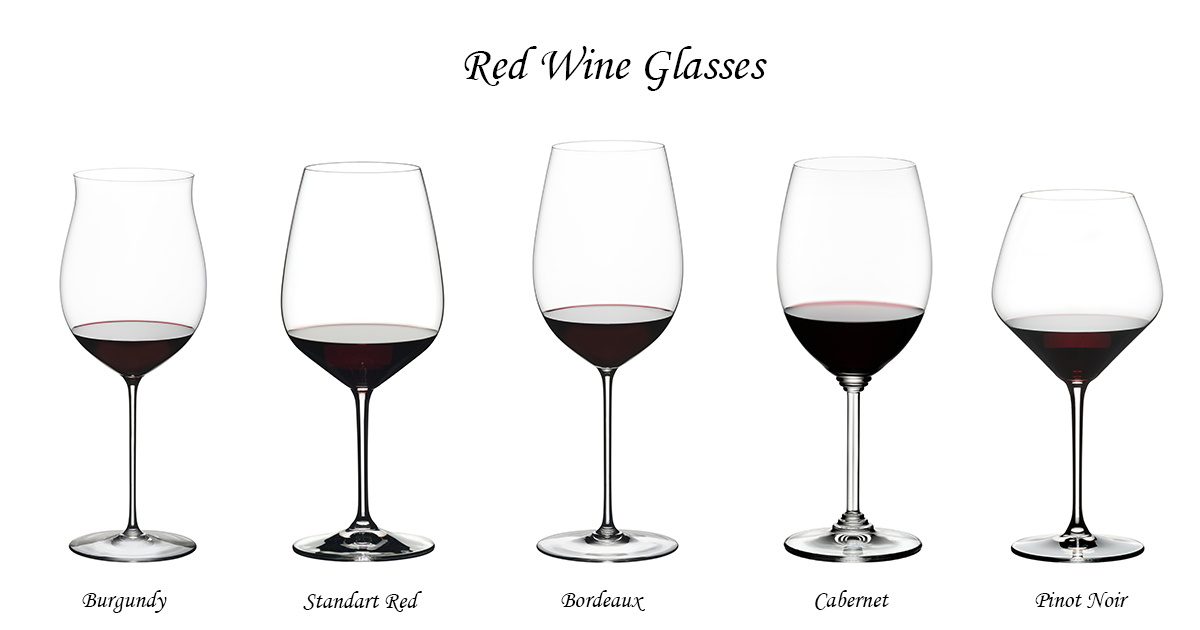
Although there are many specialty designs, four categories are especially useful when comparing red wine glass collections: Bordeaux, Burgundy, standard red and universal wine glasses.

Bordeaux Wine Glass
Bordeaux-style glasses are generally taller and have a large bowl with a relatively tapered opening. They are commonly associated with fuller-bodied red wines such as Cabernet Sauvignon and Merlot.
For commercial tableware collections, the tall silhouette also creates a formal and recognizable wine-service appearance.
Burgundy Wine Glass
Burgundy-style glasses usually have a much wider, rounder bowl than Bordeaux glasses.
The generous bowl is commonly associated with aromatic red wines such as Pinot Noir. The shape also gives the glass a distinctive premium appearance.

Standard Red Wine Glass
A standard red wine glass sits between highly specialized Bordeaux and Burgundy designs.
This type can be useful for restaurants and hospitality businesses that want a practical red wine glass without maintaining multiple specialized shapes.
Universal Wine Glass
Universal wine glasses are designed to handle multiple wine styles rather than being dedicated to one specific type of red wine.
They can be attractive for restaurants, hotels and event businesses that prioritize flexibility and simplified inventory.

3. Bordeaux Wine Glass: Tall and Structured
The Bordeaux glass is one of the most recognizable red wine glass designs. It generally has a tall bowl, substantial capacity and relatively straight sides that narrow toward the rim.
This shape is commonly associated with structured and full-bodied red wines. The larger bowl provides space for swirling and increases the wine's contact with air.
Typical Applications
- Fine-dining restaurants
- Hotel restaurants
- Wine-focused restaurants
- Premium hospitality
- Wedding and formal event table settings
4. Burgundy Wine Glass: Wide and Rounded
Burgundy-style glasses are usually shorter and wider than Bordeaux glasses. Their most obvious characteristic is the large, balloon-like bowl.
This generous bowl is commonly associated with Pinot Noir and other aromatic wines. The large internal volume also gives the glass a distinctive visual presence on the table.

Why Hotels and Restaurants May Choose Burgundy Designs
- Strong visual presentation
- Suitable for premium wine service
- Distinctive table setting appearance
- Useful for wine-focused hospitality concepts
5. Bordeaux vs Burgundy vs Universal Wine Glass
For buyers building a commercial wine glass collection, the following comparison provides a simple starting point.
| Glass Type | Bowl Shape | Common Use | B2B Consideration |
|---|---|---|---|
| Bordeaux | Tall, broad and slightly tapered | Full-bodied red wine service | Formal appearance and generous bowl |
| Burgundy | Very wide and rounded | Aromatic red wine service | Premium visual presentation |
| Standard Red | Medium-sized rounded bowl | General restaurant use | Practical and flexible |
| Universal | Medium bowl with tapered rim | Multiple wine styles | Simplified inventory |
6. The Four Parts of a Wine Glass Buyers Should Understand
When comparing suppliers, it is useful to break the wine glass down into four basic components: bowl, rim, stem and base.
Bowl
The bowl is the most visually important part of the glass. Its width, height and capacity determine much of the product's silhouette.
Rim
Rim shape and finishing contribute to the drinking experience and the overall perceived quality of the product.
Stem
Stem length affects the proportions of the glass and its appearance in a formal table setting.
Base
The base provides stability and also contributes to the overall visual balance of the wine glass.
Capacity
Capacity should be considered together with actual serving volume rather than treated as the same specification.
Proportion
Consistent proportions are especially important when supplying large hospitality or event projects.
7. Which Red Wine Glass Is Suitable for Hotels and Restaurants?
There is no single wine glass design that every hospitality business needs. The appropriate choice depends on the menu, service concept, customer expectations, table design and purchasing strategy.
- Fine dining: Consider more distinctive and premium glass silhouettes.
- Hotel restaurants: A versatile design can simplify purchasing and replacement.
- Wine-focused restaurants: Multiple bowl shapes may be useful for different wine programs.
- Wedding venues: Prioritize visual coordination with plates, flatware and centerpieces.
- Wholesale distributors: Consider MOQ, packaging, product consistency and repeat supply.
- Retail brands: Packaging, branding and product differentiation may become important purchasing factors.

8. What Should You Check When Sourcing Red Wine Glasses?
For B2B buyers, choosing a wine glass is only the first step. Supplier capability can be equally important when the order involves hundreds or thousands of pieces.
Product Consistency
Confirm how the supplier manages dimensional and visual consistency between production batches.
Sample Approval
Request samples before bulk production when the project requires specific proportions or finishing.
Packaging
Confirm how individual glasses and cartons are protected during transportation.
Customization
Ask whether logo, decoration, color or packaging customization is available.
MOQ
Confirm the minimum order quantity for standard and customized products separately.
Repeat Orders
Hotels and restaurant groups should consider future replenishment when selecting a supplier.
9. Custom Red Wine Glasses for OEM & ODM Projects
Standard wine glass designs are suitable for many commercial applications. However, some brands and hospitality projects need a more distinctive product.
Depending on the project and product, customization may include dimensions, capacity, color, decoration, logo and packaging.
Explore Star-Luck Wine Glass Products
Star-Luck supplies wine glass products for hospitality, wedding, restaurant and wholesale projects.
Custom Color Wine Glass
A customizable wine glass option for branding and project requirements.
View Product →Build a Complete Tableware Collection
Wine glasses are usually only one part of a professional table setting. For hotels, restaurants and wedding suppliers, coordinating several tableware categories can create a more consistent visual concept and simplify sourcing.
Ceramic Tableware
Ceramic plates and dinnerware for hospitality applications.
Explore Ceramic Tableware →10. Quality Control Matters for Wine Glass Sourcing
Wine glasses combine several visible components: bowl, stem, rim and base. For large commercial orders, consistency between pieces is an important consideration.
Buyers should discuss the supplier's inspection procedures and establish which appearance, dimensional and packaging characteristics are critical for the project.
- Appearance and surface condition
- Product dimensions
- Bowl and stem alignment
- Rim finishing
- Color consistency for customized products
- Packaging condition
- Carton quantity and labeling
Read more about the Star-Luck quality control approach: How We Ensure Every Piece Is Flawless – Our 7-Step Quality Control Process →
11. A Simple Wine Glass Sourcing Process
Define the Application
Restaurant, hotel, wedding, retail or wholesale project.
Choose the Shape
Compare Bordeaux, Burgundy, standard and universal designs.
Confirm Specifications
Capacity, dimensions, appearance, customization and packaging.
Request Samples
Evaluate the actual product before placing a bulk order.
Confirm QC
Establish inspection and packaging requirements.
Start Production
Move to bulk production after specifications and samples are approved.
Looking for a Red Wine Glass Supplier?
Whether you need Bordeaux-style wine glasses, Burgundy glasses, universal wine glasses or a customized design, Star-Luck can help you evaluate suitable options for restaurants, hotels, weddings, events and wholesale projects.
When sending an inquiry, include your estimated quantity, preferred glass type, capacity, customization requirements and packaging preferences.
Request a Wine Glass Quote →Red Wine Glass FAQ
What are the main types of red wine glasses?
Common categories include Bordeaux, Burgundy, standard red and universal wine glasses. They differ mainly in bowl shape, proportions and intended application.
What is a Bordeaux wine glass?
A Bordeaux-style wine glass generally has a tall bowl with relatively straight sides and a tapered opening. It is commonly associated with fuller-bodied red wines.
What is a Burgundy wine glass?
A Burgundy-style glass generally has a wider and more rounded bowl than a Bordeaux glass and is commonly associated with aromatic red wines such as Pinot Noir.
Are universal wine glasses suitable for restaurants?
Universal wine glasses can be considered when a restaurant wants one versatile glass that can serve multiple wine styles.
Can red wine glasses be customized?
Depending on the product and project, customization may include dimensions, capacity, color, decoration, logo and packaging.
What information should I provide when requesting a quotation?
Useful information includes the glass type, estimated quantity, capacity or dimensions, customization requirements, packaging requirements, target market and expected delivery schedule.

